Untitled
Introduction
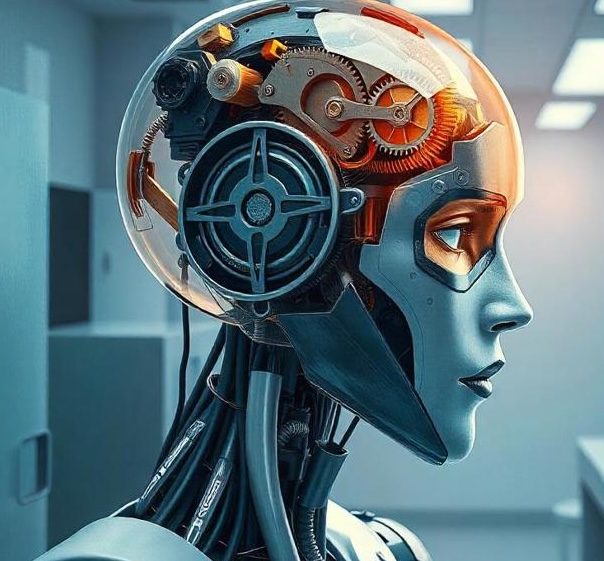
Robotics is accelerating into a new era powered by artificial intelligence, advanced sensors, and autonomous decision-making capabilities. As global industries race toward efficiency and precision, robotics has transitioned from a supporting technology to a strategic pillar driving long-term economic growth. In 2025, robotics is no longer limited to manufacturing floors—it is reshaping healthcare, logistics, defense, energy, and even consumer lifestyle.
1. The Rise of Intelligent Automation
The integration of AI into robotics has produced systems capable of real-time learning, adaptive movement, and independent operation. Unlike traditional robots that follow rigid programming, next-generation AI-powered robots interpret data, predict outcomes, and optimize their functions instantly.
Key advancements include:
-
AI-driven robotic arms that self-calibrate without human input.
-
Autonomous mobile robots (AMRs) for warehouses and last-mile deliveries.
-
Vision-guided robots capable of identifying objects, anomalies, and defects with near-perfect accuracy.
This shift is reducing downtime, increasing safety, and allowing businesses to operate 24/7.
2. Robotics in Healthcare
Healthcare robotics has experienced a breakthrough, particularly in high-precision fields such as surgery, rehabilitation, and diagnostics.
Current innovations include:
-
Robotic surgical systems enabling micro-precision procedures.
-
Exoskeleton robots for patient mobility restoration and therapy.
-
Sanitizing and monitoring robots reducing infection risks in hospitals.
These systems are improving patient outcomes while reducing staff workload, paving the way for robotics-assisted healthcare at scale.
3. Robotics in Manufacturing and Logistics
Manufacturing remains the largest adopter of robotics, driven by the need for speed and accuracy. Factories now employ collaborative robots—cobots—that work safely alongside humans.
Benefits include:
-
Faster production cycles
-
Lower defect rates
-
Reduced operational costs
-
Enhanced worker safety
In logistics, robotics is the backbone of modern supply chains. From automated pallet handling to robotic fulfillment centers, the efficiency gains are unprecedented.
4. Household and Consumer Robotics
Robotics has entered homes in ways unimaginable a decade ago. Intelligent cleaning robots, AI-driven cooking assistants, lawn-mowing bots, and personal service robots are becoming mainstream.
Consumers are increasingly seeking:
-
Smart home robots for daily assistance
-
Elder-care robotics for monitoring and support
-
Personal robots with conversational AI
The consumer robotics market is projected to cross $200B+ by 2030, marking one of the fastest-growing sectors.
5. Future Outlook: The Next Decade of Robotics
The robotics landscape of 2030 will feature deeply interconnected, cloud-powered systems capable of performing complex multi-stage tasks. Industries will transition toward hyper-automation, where every repetitive task is performed by robotics integrated with enterprise-level AI.
Expected breakthroughs:
-
Fully autonomous factories
-
AI-driven humanoid labor support
-
Cross-industry robotic ecosystems communicating in real time
-
Robotics-powered disaster response and environmental cleanup
Robotics will augment—not replace—human capability, enabling professionals to focus on creativity, strategy, and innovation.
Conclusion
Robotics is not just evolving—it is redefining how industries operate. With exponential advancements in AI, sensing technologies, and automation frameworks, robots are shifting from tools to intelligent partners. For businesses aiming to scale, robotics is now a necessity, not an option. The organizations that embrace robotics today will lead the market tomorrow.